

NOW AVAILABLE AT THOMSON HOSPITAL
Precision Autoimmune Diagnostics Close to Home
Discover MosaiQ and go live in your laboratories
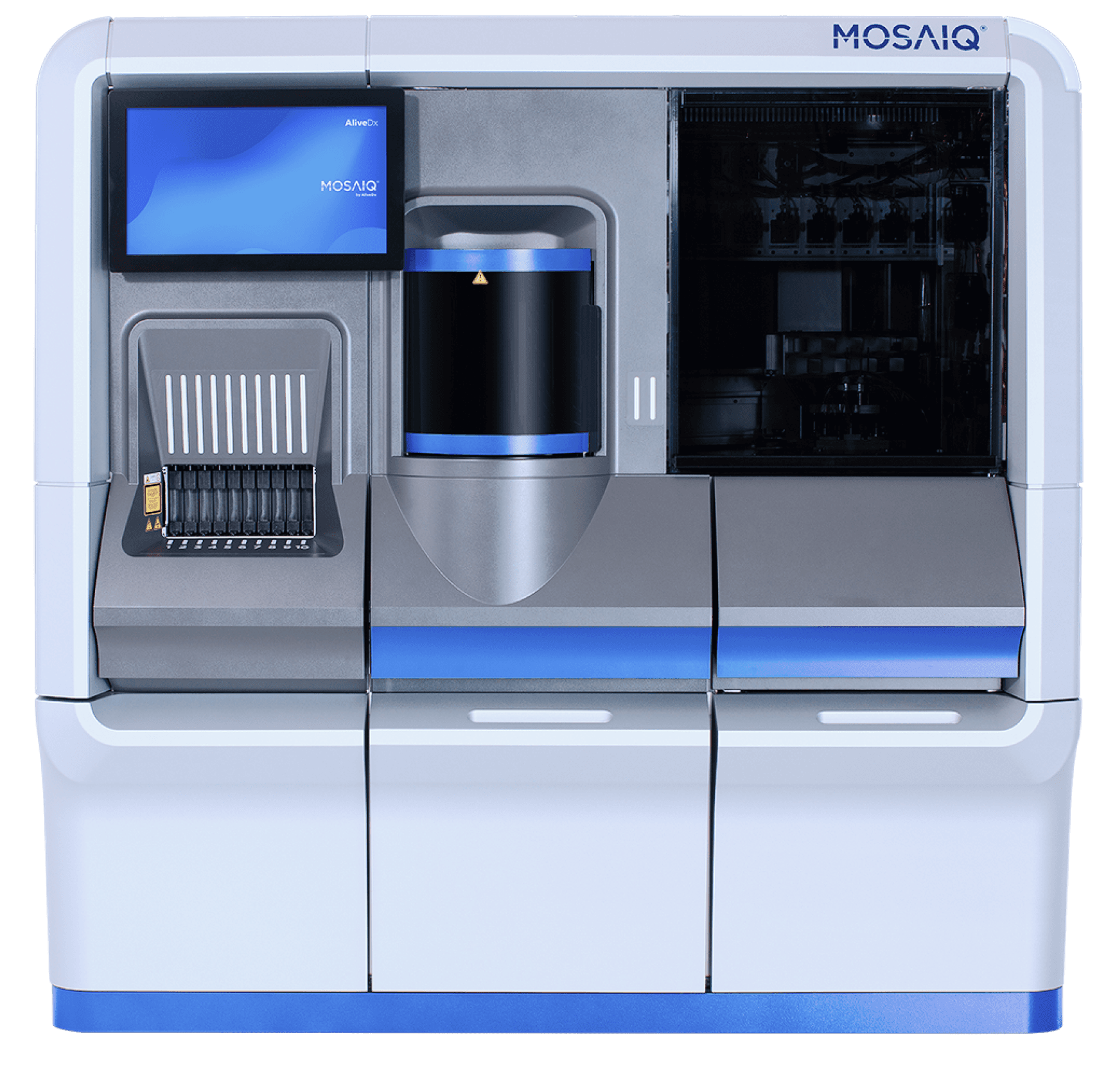
Touch screen
Intuitive graphical user interface facilitates ease of use and quick handling
Ergonomic software complete with color-coded status and flags manages worklists, reagents, and consumables as well as results
Proprietary MosaiQ software can be connected to LIS is mono or bidirectional mode avoiding human error and time-consuming paperwork for a more efficient workflow
Water drawers
MosaiQ can be connected to the water plumbing system for a simplified workflow with fewer user interactions
Reagent door
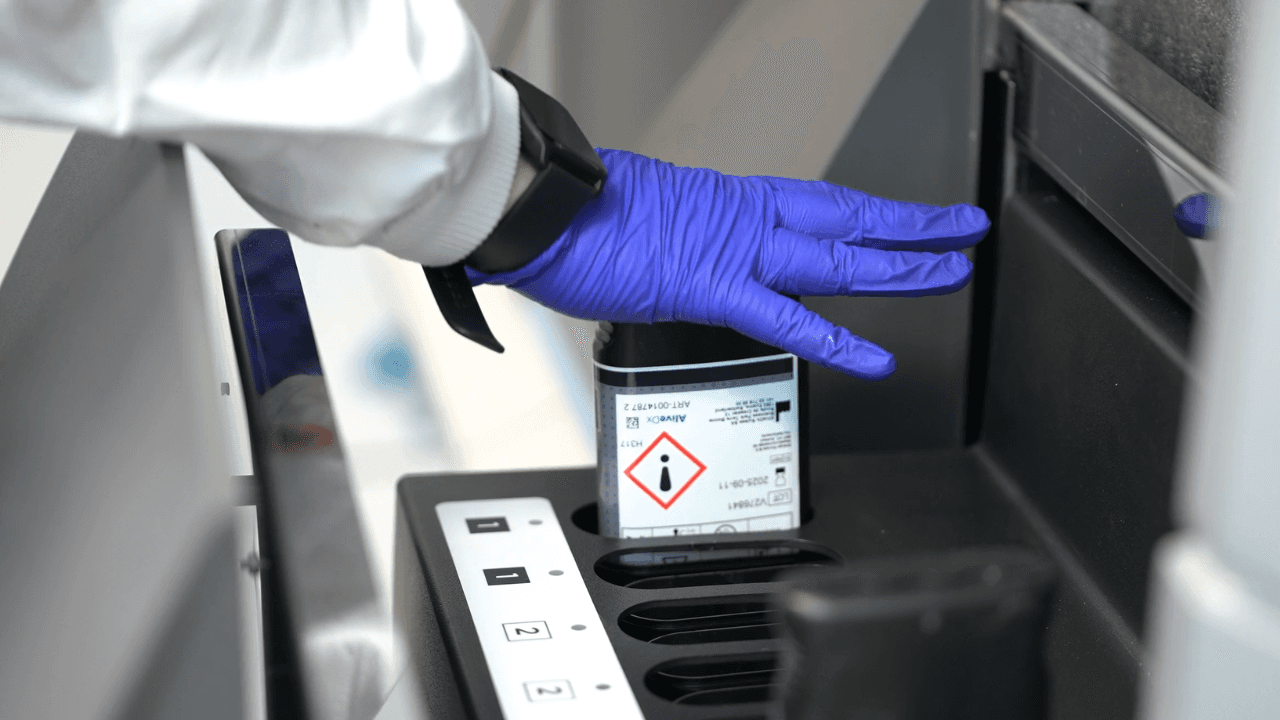
Loading area where ready-to-use color-coded reagents are placed
Disposable Dispense Cartridge (DDC) minimizes user intervention and maintenance and avoids reagent carry-over
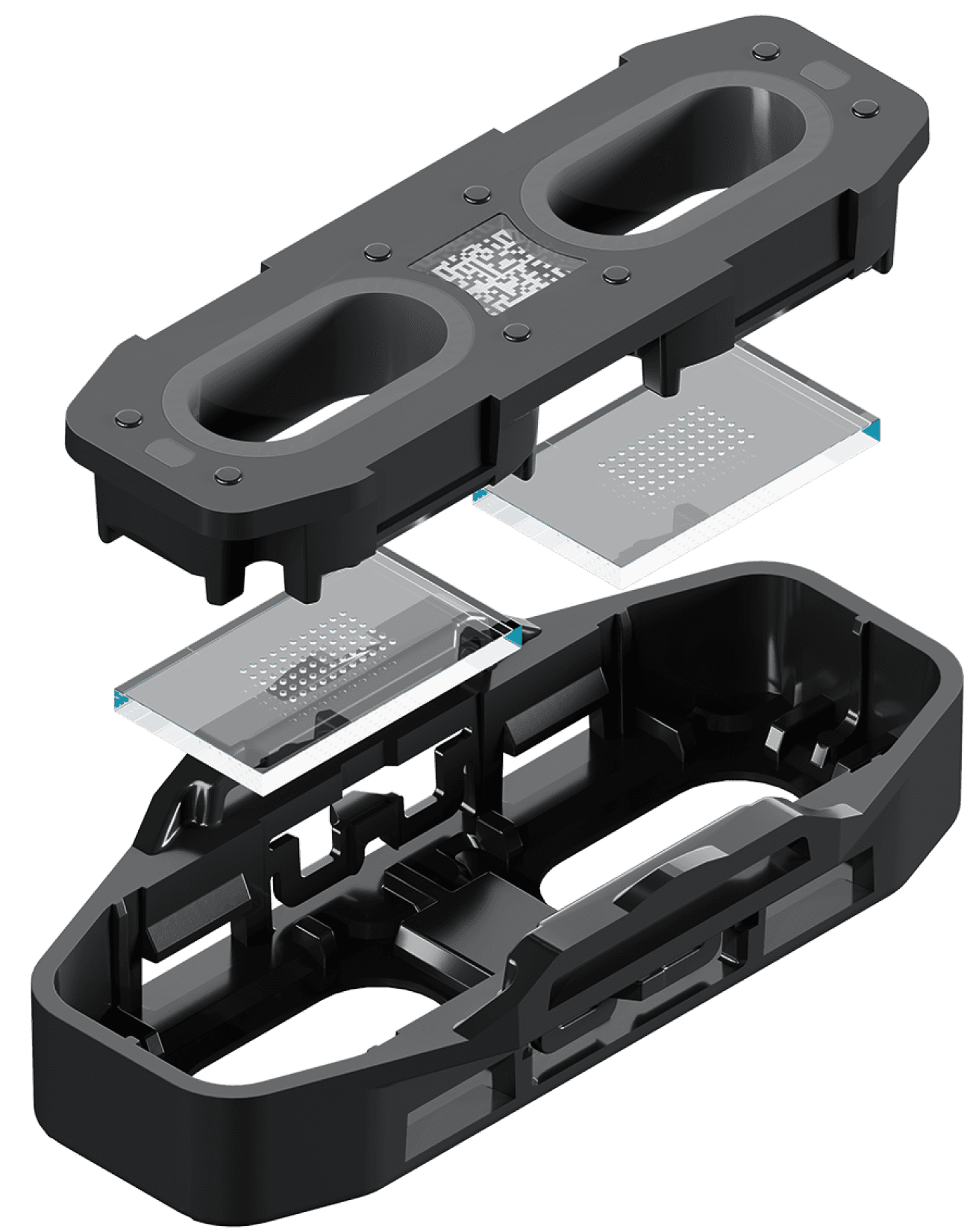
Microarray magazine station
High capacity – up to 4 magazines with 250 microarrays each can be loaded at once for improved walk-away time
Each magazine can represent different panels, for a flexible multiplex, multimodal solution that delivers results quickly
Magazine Unique ID and Microarray QR code improves traceability and accelerates responsiveness of investigations
Sample loading area
Random access
High throughput with up to 120 sample loading capacity
Promotes optimized workflow with dual pipettor probe tip that allows different tests in different wells simultaneously
Ensures sampling accuracy with liquid level detection sensor, optical liquid verification, and a barometric sensor that secures quality by detecting clots
Incubation chamber and wash station
Optical and ultrasonic sensor monitors wash steps and secure the dispensation and aspiration during each wash cycle
Environmental monitoring of incubation performance ensures accurate results
Spotlight on the microarray reaction
Integrated calibrators within each microarray delivers reliable results
Integrated anti-human IgG controls secures the presence of the serum at the ultimate stage of the reaction
Integrated human IgG controls secure the presence of the conjugate (detection reagent) at the ultimate stage of the reaction
Integrated negative control validates that there is no non-specific reaction at the ultimate stage of the reaction
Reagent drawer
RFID Read-Write capability enables traceability, avoids human mistakes, and saves time
Color-coded and Poka Yoke (lock and key system) avoids human mistakes in a busy laboratory environment
Concentrated wash buffer solutions are diluted onboard to reduce storage volume, and increase staff safety with lower volume to carry
Liquid waste
MosaiQ can be connected to the drain ensuring staff does not come into contact with liquid waste for increased staff safety
Alarm
Visual and audible alarm makes MosaiQ easy and safe to use in a busy laboratory environment

NOW AVAILABLE AT THOMSON HOSPITAL
Precision Autoimmune Diagnostics Close to Home
Discover MosaiQ and go live in your laboratories
Touch screen
Intuitive graphical user interface facilitates ease of use and quick handling
Ergonomic software complete with color-coded status and flags manages worklists, reagents, and consumables as well as results
Proprietary MosaiQ software can be connected to LIS is mono or bidirectional mode avoiding human error and time-consuming paperwork for a more efficient workflow
Water drawers
MosaiQ can be connected to the water plumbing system for a simplified workflow with fewer user interactions
Reagent door
Loading area where ready-to-use color-coded reagents are placed
Disposable Dispense Cartridge (DDC) minimizes user intervention and maintenance and avoids reagent carry-over
Microarray magazine station
High capacity – up to 4 magazines with 250 microarrays each can be loaded at once for improved walk-away time
Each magazine can represent different panels, for a flexible multiplex, multimodal solution that delivers results quickly
Magazine Unique ID and Microarray QR code improves traceability and accelerates responsiveness of investigations
Sample loading area
Random access
High throughput with up to 120 sample loading capacity
Promotes optimized workflow with dual pipettor probe tip that allows different tests in different wells simultaneously
Ensures sampling accuracy with liquid level detection sensor, optical liquid verification, and a barometric sensor that secures quality by detecting clots
Incubation chamber and wash station
Optical and ultrasonic sensor monitors wash steps and secure the dispensation and aspiration during each wash cycle
Environmental monitoring of incubation performance ensures accurate results
Spotlight on the microarray reaction
Integrated calibrators within each microarray delivers reliable results
Integrated anti-human IgG controls secures the presence of the serum at the ultimate stage of the reaction
Integrated human IgG controls secure the presence of the conjugate (detection reagent) at the ultimate stage of the reaction
Integrated negative control validates that there is no non-specific reaction at the ultimate stage of the reaction
Reagent drawer
RFID Read-Write capability enables traceability, avoids human mistakes, and saves time
Color-coded and Poka Yoke (lock and key system) avoids human mistakes in a busy laboratory environment
Concentrated wash buffer solutions are diluted onboard to reduce storage volume, and increase staff safety with lower volume to carry
Liquid waste
MosaiQ can be connected to the drain ensuring staff does not come into contact with liquid waste for increased staff safety
Alarm
Visual and audible alarm makes MosaiQ easy and safe to use in a busy laboratory environment
NOW AVAILABLE AT THOMSON HOSPITAL
Precision Autoimmune Diagnostics Close to Home
Discover MosaiQ and go live in your laboratories
Touch screen
Intuitive graphical user interface facilitates ease of use and quick handling
Ergonomic software complete with color-coded status and flags manages worklists, reagents, and consumables as well as results
Proprietary MosaiQ software can be connected to LIS is mono or bidirectional mode avoiding human error and time-consuming paperwork for a more efficient workflow
Water drawers
MosaiQ can be connected to the water plumbing system for a simplified workflow with fewer user interactions
Reagent door
Loading area where ready-to-use color-coded reagents are placed
Disposable Dispense Cartridge (DDC) minimizes user intervention and maintenance and avoids reagent carry-over
Microarray magazine station
High capacity – up to 4 magazines with 250 microarrays each can be loaded at once for improved walk-away time
Each magazine can represent different panels, for a flexible multiplex, multimodal solution that delivers results quickly
Magazine Unique ID and Microarray QR code improves traceability and accelerates responsiveness of investigations
Sample loading area
Random access
High throughput with up to 120 sample loading capacity
Promotes optimized workflow with dual pipettor probe tip that allows different tests in different wells simultaneously
Ensures sampling accuracy with liquid level detection sensor, optical liquid verification, and a barometric sensor that secures quality by detecting clots
Incubation chamber and wash station
Optical and ultrasonic sensor monitors wash steps and secure the dispensation and aspiration during each wash cycle
Environmental monitoring of incubation performance ensures accurate results
Spotlight on the microarray reaction
Integrated calibrators within each microarray delivers reliable results
Integrated anti-human IgG controls secures the presence of the serum at the ultimate stage of the reaction
Integrated human IgG controls secure the presence of the conjugate (detection reagent) at the ultimate stage of the reaction
Integrated negative control validates that there is no non-specific reaction at the ultimate stage of the reaction
Reagent drawer
RFID Read-Write capability enables traceability, avoids human mistakes, and saves time
Color-coded and Poka Yoke (lock and key system) avoids human mistakes in a busy laboratory environment
Concentrated wash buffer solutions are diluted onboard to reduce storage volume, and increase staff safety with lower volume to carry
Liquid waste
MosaiQ can be connected to the drain ensuring staff does not come into contact with liquid waste for increased staff safety
Alarm
Visual and audible alarm makes MosaiQ easy and safe to use in a busy laboratory environment
NOW AVAILABLE AT THOMSON HOSPITAL
Precision Autoimmune Diagnostics Close to Home
Discover MosaiQ and go live in your laboratories
Touch screen
Intuitive graphical user interface facilitates ease of use and quick handling
Ergonomic software complete with color-coded status and flags manages worklists, reagents, and consumables as well as results
Proprietary MosaiQ software can be connected to LIS is mono or bidirectional mode avoiding human error and time-consuming paperwork for a more efficient workflow
Water drawers
MosaiQ can be connected to the water plumbing system for a simplified workflow with fewer user interactions
Reagent door
Loading area where ready-to-use color-coded reagents are placed
Disposable Dispense Cartridge (DDC) minimizes user intervention and maintenance and avoids reagent carry-over
Microarray magazine station
High capacity – up to 4 magazines with 250 microarrays each can be loaded at once for improved walk-away time
Each magazine can represent different panels, for a flexible multiplex, multimodal solution that delivers results quickly
Magazine Unique ID and Microarray QR code improves traceability and accelerates responsiveness of investigations
Sample loading area
Random access
High throughput with up to 120 sample loading capacity
Promotes optimized workflow with dual pipettor probe tip that allows different tests in different wells simultaneously
Ensures sampling accuracy with liquid level detection sensor, optical liquid verification, and a barometric sensor that secures quality by detecting clots
Incubation chamber and wash station
Optical and ultrasonic sensor monitors wash steps and secure the dispensation and aspiration during each wash cycle
Environmental monitoring of incubation performance ensures accurate results
Spotlight on the microarray reaction
Integrated calibrators within each microarray delivers reliable results
Integrated anti-human IgG controls secures the presence of the serum at the ultimate stage of the reaction
Integrated human IgG controls secure the presence of the conjugate (detection reagent) at the ultimate stage of the reaction
Integrated negative control validates that there is no non-specific reaction at the ultimate stage of the reaction
Reagent drawer
RFID Read-Write capability enables traceability, avoids human mistakes, and saves time
Color-coded and Poka Yoke (lock and key system) avoids human mistakes in a busy laboratory environment
Concentrated wash buffer solutions are diluted onboard to reduce storage volume, and increase staff safety with lower volume to carry
Liquid waste
MosaiQ can be connected to the drain ensuring staff does not come into contact with liquid waste for increased staff safety
Alarm
Visual and audible alarm makes MosaiQ easy and safe to use in a busy laboratory environment
NOW AVAILABLE AT THOMSON HOSPITAL
Precision Autoimmune Diagnostics Close to Home
Discover MosaiQ and go live in your laboratories
Touch screen
Intuitive graphical user interface facilitates ease of use and quick handling
Ergonomic software complete with color-coded status and flags manages worklists, reagents, and consumables as well as results
Proprietary MosaiQ software can be connected to LIS is mono or bidirectional mode avoiding human error and time-consuming paperwork for a more efficient workflow
Water drawers
MosaiQ can be connected to the water plumbing system for a simplified workflow with fewer user interactions
Reagent door
Loading area where ready-to-use color-coded reagents are placed
Disposable Dispense Cartridge (DDC) minimizes user intervention and maintenance and avoids reagent carry-over
Microarray magazine station
High capacity – up to 4 magazines with 250 microarrays each can be loaded at once for improved walk-away time
Each magazine can represent different panels, for a flexible multiplex, multimodal solution that delivers results quickly
Magazine Unique ID and Microarray QR code improves traceability and accelerates responsiveness of investigations
Sample loading area
Random access
High throughput with up to 120 sample loading capacity
Promotes optimized workflow with dual pipettor probe tip that allows different tests in different wells simultaneously
Ensures sampling accuracy with liquid level detection sensor, optical liquid verification, and a barometric sensor that secures quality by detecting clots
Incubation chamber and wash station
Optical and ultrasonic sensor monitors wash steps and secure the dispensation and aspiration during each wash cycle
Environmental monitoring of incubation performance ensures accurate results
Spotlight on the microarray reaction
Integrated calibrators within each microarray delivers reliable results
Integrated anti-human IgG controls secures the presence of the serum at the ultimate stage of the reaction
Integrated human IgG controls secure the presence of the conjugate (detection reagent) at the ultimate stage of the reaction
Integrated negative control validates that there is no non-specific reaction at the ultimate stage of the reaction
Reagent drawer
RFID Read-Write capability enables traceability, avoids human mistakes, and saves time
Color-coded and Poka Yoke (lock and key system) avoids human mistakes in a busy laboratory environment
Concentrated wash buffer solutions are diluted onboard to reduce storage volume, and increase staff safety with lower volume to carry
Liquid waste
MosaiQ can be connected to the drain ensuring staff does not come into contact with liquid waste for increased staff safety
Alarm
Visual and audible alarm makes MosaiQ easy and safe to use in a busy laboratory environment


Singleplex VS Multiplex
A cost effective, end-to-end automation with simplicity, reliability and speed.
Singleplex: multiple
reflex steps
Workflow complexity
One Step
Simple Process
3+ Sample Tubes
Sample handling
1 Sample Tube
11 Individual Reagents
Reagent management
1 Microarray
3–7 Days
Turn-around time
<1 Day
Benefits
Discover how MosaiQ technology can transform your lab
From an intuitive workflow to rapid turnaround times and actionable insights —
everything is optimised for better performance.

Simple Workflow
Reclaim Your Lab's Most Valuable
Resource: Time
MosaiQ technology automates repetitive manual tasks, freeing your team to focus on results that matter most.
Load & Go functionality with true random access means samples move seamlessly—no batching, no waiting, no manual intervention.
On-board RFID tracks reagent stability and expiration automatically, eliminating manual inventory management and reducing errors.
Your technicians spend less time on routine tasks and more time on value-added work, improving lab efficiency and patient care.

Connectibe Tissue Disease

Autoimmune Connective Tissue Diseases (CTD) are complex disorders that may present with a wide spectrum of non-specific manifestations and its differential diagnosis remain clinically challenging.¹
Our targeted menu covers 15 markers in one panel.²–¹⁰
CTD
DFS70/LEDGF Anti-DFS70 confirms specific anti-nuclear antibodies pattern observed in immunofluorescence.
RA
CCP Anti-CCP in combination with other markets can help identify connective disease comorbidity
SLE
dsDNA, Sm, Sm/RNP, Chromatin, Ribosomal P Anti-Chromatin improves the sensitivity of SLE detection. Anti-Ribosomal P is associated with neuro-psychiatric SLE.
IIM
Jo-1 Anti-Jo-1 are the only autoantibodies included in the current IIM classification criteria
MCTD
U1RNP and Sm/RNP Anti-U1RNP and anti-Sm/RNP help to differentiate MCTD.
SjS
SS-A (Ro60), SS-B (La), TRIM21 (Ro52) Differentiating anti-SS-A 60 from TRIM21 (Anti-SSA 52) is important as TRIM21 may be associated with interstitial lung disease.
SSc
CENP-B, Scl-70, RNA Pol III These three markers aid the differentiation between diffuse and limited form of SSc.
CTD: Connective Tissue Disease
RA: Rheumatoid Arthritis
SLE: Systemic Lupus Erythematosus
RA: Rheumatoid Arthritis
MCTD: Mixed Connective Tissue Disease
SjS: Sjögren’s Syndrome
SSc: Systemic Sclerosis
LOCATION
Thomson Hospital Pathology Wing, Level 2
The Autoimmune Testing Center is located in the newly renovated East Wing. Parking is available in Garage B.
Mon – Sun: Open 24 hours
03-6287 1111

Celiac Disease Panel - MosaiQ
tTG
IgA, IgG
DGP
IgA, IgG
Combining both isotypes covers most serological markers recommended by clinical guidelines even in case of selective IgA deficiency and helps optimize workflow efficiencies.
IgA
Deficiency
Assists clinicians in the interpretation of tTG IgA and DGP IgA results as selective IgA deficiency affects 2-3% of patients with celiac disease
1
Celiac disease is a chronic digestive and immune disorder, found in genetically predisposed individuals, triggered by glutaen ingestion, affecting the small intestine with an estimated prevalence of about 1%. The diagnosis is often challenging due to a wide range of overlapping symptoms.
AliveDX planar microarray supporting celiac disease diagnosis, AiPlex CD, is designed to deliver rapid in-vitro test results, helping to reduce the time to results for patients. The panel combines both IgA and IgA, proving a comprehensive analysis in every sample.

Celiac Disease

Singleplex VS Multiplex
A cost effective, end-to-end automation with simplicity, reliability and speed.
Singleplex: multiple
reflex steps
Workflow complexity
One Step
Simple Process
3+ Sample Tubes
Sample handling
1 Sample Tube
11 Individual Reagents
Reagent management
1 Microarray
3–7 Days
Turn-around time
<1 Day
Benefits
Discover how MosaiQ technology can transform your lab
From an intuitive workflow to rapid turnaround times and actionable insights —
everything is optimised for better performance.
Simple Workflow
Reclaim Your Lab's Most Valuable
Resource: Time
MosaiQ technology automates repetitive manual tasks, freeing your team to focus on results that matter most.
Load & Go functionality with true random access means samples move seamlessly—no batching, no waiting, no manual intervention.
On-board RFID tracks reagent stability and expiration automatically, eliminating manual inventory management and reducing errors.
Your technicians spend less time on routine tasks and more time on value-added work, improving lab efficiency and patient care.
Connectibe Tissue Disease
Autoimmune Connective Tissue Diseases (CTD) are complex disorders that may present with a wide spectrum of non-specific manifestations and its differential diagnosis remain clinically challenging.¹
Our targeted menu covers 15 markers in one panel.²–¹⁰
CTD
DFS70/LEDGF Anti-DFS70 confirms specific anti-nuclear antibodies pattern observed in immunofluorescence.
RA
CCP Anti-CCP in combination with other markets can help identify connective disease comorbidity
SLE
dsDNA, Sm, Sm/RNP, Chromatin, Ribosomal P Anti-Chromatin improves the sensitivity of SLE detection. Anti-Ribosomal P is associated with neuro-psychiatric SLE.
IIM
Jo-1 Anti-Jo-1 are the only autoantibodies included in the current IIM classification criteria
MCTD
U1RNP and Sm/RNP Anti-U1RNP and anti-Sm/RNP help to differentiate MCTD.
SjS
SS-A (Ro60), SS-B (La), TRIM21 (Ro52) Differentiating anti-SS-A 60 from TRIM21 (Anti-SSA 52) is important as TRIM21 may be associated with interstitial lung disease.
SSc
CENP-B, Scl-70, RNA Pol III These three markers aid the differentiation between diffuse and limited form of SSc.
CTD: Connective Tissue Disease
RA: Rheumatoid Arthritis
SLE: Systemic Lupus Erythematosus
RA: Rheumatoid Arthritis
MCTD: Mixed Connective Tissue Disease
SjS: Sjögren’s Syndrome
SSc: Systemic Sclerosis
LOCATION
Thomson Hospital Pathology Wing, Level 2
The Autoimmune Testing Center is located in the newly renovated East Wing. Parking is available in Garage B.
Mon – Sun: Open 24 hours
03-6287 1111
Celiac Disease Panel - MosaiQ
tTG
IgA, IgG
DGP
IgA, IgG
Combining both isotypes covers most serological markers recommended by clinical guidelines even in case of selective IgA deficiency and helps optimize workflow efficiencies.
IgA
Deficiency
Assists clinicians in the interpretation of tTG IgA and DGP IgA results as selective IgA deficiency affects 2-3% of patients with celiac disease
1
Celiac disease is a chronic digestive and immune disorder, found in genetically predisposed individuals, triggered by glutaen ingestion, affecting the small intestine with an estimated prevalence of about 1%. The diagnosis is often challenging due to a wide range of overlapping symptoms.
AliveDX planar microarray supporting celiac disease diagnosis, AiPlex CD, is designed to deliver rapid in-vitro test results, helping to reduce the time to results for patients. The panel combines both IgA and IgA, proving a comprehensive analysis in every sample.
Celiac Disease
Singleplex VS Multiplex
A cost effective, end-to-end automation with simplicity, reliability and speed.
Singleplex: multiple
reflex steps
Workflow complexity
One Step
Simple Process
3+ Sample Tubes
Sample handling
1 Sample Tube
11 Individual Reagents
Reagent management
1 Microarray
3–7 Days
Turn-around time
<1 Day
Benefits
Discover how MosaiQ technology can transform your lab
From an intuitive workflow to rapid turnaround times and actionable insights —
everything is optimised for better performance.
Simple Workflow
Reclaim Your Lab's Most Valuable
Resource: Time
MosaiQ technology automates repetitive manual tasks, freeing your team to focus on results that matter most.
Load & Go functionality with true random access means samples move seamlessly—no batching, no waiting, no manual intervention.
On-board RFID tracks reagent stability and expiration automatically, eliminating manual inventory management and reducing errors.
Your technicians spend less time on routine tasks and more time on value-added work, improving lab efficiency and patient care.
Connectibe Tissue Disease
Autoimmune Connective Tissue Diseases (CTD) are complex disorders that may present with a wide spectrum of non-specific manifestations and its differential diagnosis remain clinically challenging.¹
Our targeted menu covers 15 markers in one panel.²–¹⁰
CTD
DFS70/LEDGF Anti-DFS70 confirms specific anti-nuclear antibodies pattern observed in immunofluorescence.
RA
CCP Anti-CCP in combination with other markets can help identify connective disease comorbidity
SLE
dsDNA, Sm, Sm/RNP, Chromatin, Ribosomal P Anti-Chromatin improves the sensitivity of SLE detection. Anti-Ribosomal P is associated with neuro-psychiatric SLE.
IIM
Jo-1 Anti-Jo-1 are the only autoantibodies included in the current IIM classification criteria
MCTD
U1RNP and Sm/RNP Anti-U1RNP and anti-Sm/RNP help to differentiate MCTD.
SjS
SS-A (Ro60), SS-B (La), TRIM21 (Ro52) Differentiating anti-SS-A 60 from TRIM21 (Anti-SSA 52) is important as TRIM21 may be associated with interstitial lung disease.
SSc
CENP-B, Scl-70, RNA Pol III These three markers aid the differentiation between diffuse and limited form of SSc.
CTD: Connective Tissue Disease
RA: Rheumatoid Arthritis
SLE: Systemic Lupus Erythematosus
RA: Rheumatoid Arthritis
MCTD: Mixed Connective Tissue Disease
SjS: Sjögren’s Syndrome
SSc: Systemic Sclerosis
LOCATION
Thomson Hospital Pathology Wing, Level 2
The Autoimmune Testing Center is located in the newly renovated East Wing. Parking is available in Garage B.
Mon – Sun: Open 24 hours
03-6287 1111
Celiac Disease Panel - MosaiQ
tTG
IgA, IgG
DGP
IgA, IgG
Combining both isotypes covers most serological markers recommended by clinical guidelines even in case of selective IgA deficiency and helps optimize workflow efficiencies.
IgA
Deficiency
Assists clinicians in the interpretation of tTG IgA and DGP IgA results as selective IgA deficiency affects 2-3% of patients with celiac disease
1
Celiac disease is a chronic digestive and immune disorder, found in genetically predisposed individuals, triggered by glutaen ingestion, affecting the small intestine with an estimated prevalence of about 1%. The diagnosis is often challenging due to a wide range of overlapping symptoms.
AliveDX planar microarray supporting celiac disease diagnosis, AiPlex CD, is designed to deliver rapid in-vitro test results, helping to reduce the time to results for patients. The panel combines both IgA and IgA, proving a comprehensive analysis in every sample.
Celiac Disease
Singleplex VS Multiplex
A cost effective, end-to-end automation with simplicity, reliability and speed.
Singleplex: multiple
reflex steps
Workflow complexity
One Step
Simple Process
3+ Sample Tubes
Sample handling
1 Sample Tube
11 Individual Reagents
Reagent management
1 Microarray
3–7 Days
Turn-around time
<1 Day
Benefits
Discover how MosaiQ technology can transform your lab
From an intuitive workflow to rapid turnaround times and actionable insights —
everything is optimised for better performance.
Simple Workflow
Reclaim Your Lab's Most Valuable
Resource: Time
MosaiQ technology automates repetitive manual tasks, freeing your team to focus on results that matter most.
Load & Go functionality with true random access means samples move seamlessly—no batching, no waiting, no manual intervention.
On-board RFID tracks reagent stability and expiration automatically, eliminating manual inventory management and reducing errors.
Your technicians spend less time on routine tasks and more time on value-added work, improving lab efficiency and patient care.
Connectibe Tissue Disease
Autoimmune Connective Tissue Diseases (CTD) are complex disorders that may present with a wide spectrum of non-specific manifestations and its differential diagnosis remain clinically challenging.¹
Our targeted menu covers 15 markers in one panel.²–¹⁰
CTD
DFS70/LEDGF Anti-DFS70 confirms specific anti-nuclear antibodies pattern observed in immunofluorescence.
RA
CCP Anti-CCP in combination with other markets can help identify connective disease comorbidity
SLE
dsDNA, Sm, Sm/RNP, Chromatin, Ribosomal P Anti-Chromatin improves the sensitivity of SLE detection. Anti-Ribosomal P is associated with neuro-psychiatric SLE.
IIM
Jo-1 Anti-Jo-1 are the only autoantibodies included in the current IIM classification criteria
MCTD
U1RNP and Sm/RNP Anti-U1RNP and anti-Sm/RNP help to differentiate MCTD.
SjS
SS-A (Ro60), SS-B (La), TRIM21 (Ro52) Differentiating anti-SS-A 60 from TRIM21 (Anti-SSA 52) is important as TRIM21 may be associated with interstitial lung disease.
SSc
CENP-B, Scl-70, RNA Pol III These three markers aid the differentiation between diffuse and limited form of SSc.
CTD: Connective Tissue Disease
RA: Rheumatoid Arthritis
SLE: Systemic Lupus Erythematosus
RA: Rheumatoid Arthritis
MCTD: Mixed Connective Tissue Disease
SjS: Sjögren’s Syndrome
SSc: Systemic Sclerosis
LOCATION
Thomson Hospital Pathology Wing, Level 2
The Autoimmune Testing Center is located in the newly renovated East Wing. Parking is available in Garage B.
Mon – Sun: Open 24 hours
03-6287 1111
Celiac Disease Panel - MosaiQ
tTG
IgA, IgG
DGP
IgA, IgG
Combining both isotypes covers most serological markers recommended by clinical guidelines even in case of selective IgA deficiency and helps optimize workflow efficiencies.
IgA
Deficiency
Assists clinicians in the interpretation of tTG IgA and DGP IgA results as selective IgA deficiency affects 2-3% of patients with celiac disease
1
Celiac disease is a chronic digestive and immune disorder, found in genetically predisposed individuals, triggered by glutaen ingestion, affecting the small intestine with an estimated prevalence of about 1%. The diagnosis is often challenging due to a wide range of overlapping symptoms.
AliveDX planar microarray supporting celiac disease diagnosis, AiPlex CD, is designed to deliver rapid in-vitro test results, helping to reduce the time to results for patients. The panel combines both IgA and IgA, proving a comprehensive analysis in every sample.
Celiac Disease
Singleplex VS Multiplex
A cost effective, end-to-end automation with simplicity, reliability and speed.
Singleplex: multiple
reflex steps
Workflow complexity
One Step
Simple Process
3+ Sample Tubes
Sample handling
1 Sample Tube
11 Individual Reagents
Reagent management
1 Microarray
3–7 Days
Turn-around time
<1 Day
Benefits
Discover how MosaiQ technology can transform your lab
From an intuitive workflow to rapid turnaround times and actionable insights —
everything is optimised for better performance.
Simple Workflow
Reclaim Your Lab's Most Valuable
Resource: Time
MosaiQ technology automates repetitive manual tasks, freeing your team to focus on results that matter most.
Load & Go functionality with true random access means samples move seamlessly—no batching, no waiting, no manual intervention.
On-board RFID tracks reagent stability and expiration automatically, eliminating manual inventory management and reducing errors.
Your technicians spend less time on routine tasks and more time on value-added work, improving lab efficiency and patient care.
Connectibe Tissue Disease
Autoimmune Connective Tissue Diseases (CTD) are complex disorders that may present with a wide spectrum of non-specific manifestations and its differential diagnosis remain clinically challenging.¹
Our targeted menu covers 15 markers in one panel.²–¹⁰
CTD
DFS70/LEDGF Anti-DFS70 confirms specific anti-nuclear antibodies pattern observed in immunofluorescence.
RA
CCP Anti-CCP in combination with other markets can help identify connective disease comorbidity
SLE
dsDNA, Sm, Sm/RNP, Chromatin, Ribosomal P Anti-Chromatin improves the sensitivity of SLE detection. Anti-Ribosomal P is associated with neuro-psychiatric SLE.
IIM
Jo-1 Anti-Jo-1 are the only autoantibodies included in the current IIM classification criteria
MCTD
U1RNP and Sm/RNP Anti-U1RNP and anti-Sm/RNP help to differentiate MCTD.
SjS
SS-A (Ro60), SS-B (La), TRIM21 (Ro52) Differentiating anti-SS-A 60 from TRIM21 (Anti-SSA 52) is important as TRIM21 may be associated with interstitial lung disease.
SSc
CENP-B, Scl-70, RNA Pol III These three markers aid the differentiation between diffuse and limited form of SSc.
CTD: Connective Tissue Disease
RA: Rheumatoid Arthritis
SLE: Systemic Lupus Erythematosus
RA: Rheumatoid Arthritis
MCTD: Mixed Connective Tissue Disease
SjS: Sjögren’s Syndrome
SSc: Systemic Sclerosis
LOCATION
Thomson Hospital Pathology Wing, Level 2
The Autoimmune Testing Center is located in the newly renovated East Wing. Parking is available in Garage B.
Mon – Sun: Open 24 hours
03-6287 1111
Celiac Disease Panel - MosaiQ
tTG
IgA, IgG
DGP
IgA, IgG
Combining both isotypes covers most serological markers recommended by clinical guidelines even in case of selective IgA deficiency and helps optimize workflow efficiencies.
IgA
Deficiency
Assists clinicians in the interpretation of tTG IgA and DGP IgA results as selective IgA deficiency affects 2-3% of patients with celiac disease
1
Celiac disease is a chronic digestive and immune disorder, found in genetically predisposed individuals, triggered by glutaen ingestion, affecting the small intestine with an estimated prevalence of about 1%. The diagnosis is often challenging due to a wide range of overlapping symptoms.
AliveDX planar microarray supporting celiac disease diagnosis, AiPlex CD, is designed to deliver rapid in-vitro test results, helping to reduce the time to results for patients. The panel combines both IgA and IgA, proving a comprehensive analysis in every sample.
Celiac Disease



Unlock Strategic Partnerships Across the UK Today
Discover how MosaiQ multiplexing technology is being adopted and evaluated across the UK, and how it is shaping the future of diagnostics.
‘’The MosaiQ® platform will simplify workflow and help to decrease turn-around times for patient results as currently samples have to go on several analysers to get all the required results.’’
Paula Griffiths - Immunology Lab Manager
at Swansea Bay

’The MosaiQ® is an innovative analyser that I could see being used in Immunology laboratories on a routine basis, it is very intuitive, and the software associated is easy to navigate.’’
Faye Sims - Operational Manager Immunology
at Peterborough Northwest Anglia NHS Foundation Trust

01
/02


Explore Further Clinical Insights and Resources
If you’re looking to learn more about specific assays or need scientific evidence, head to our Scientific Insights Center. There, you can explore a variety of publications, blog posts, webinars, and other resources to dive deeper into our solutions and discover how they can support your lab.
Our menu
Comprehensive solutions
for autoimmune and allergy diseases.
AiPlex® CTDplus
Connective Tissue Disease
AiPlex® VAS
Vasculitis
AiPlex® CD
Coeliac Disease
AiPlex® APS
Antiphospholipid Syndrome (APS)
IN DEVELOPMENT
AllergyPlex®
COMBO
IN DEVELOPMENT
*Certain assays are in development: subject to regulatory approvals

Our Turnkey Solutions
Our solutions are designed to address the needs of clinicians and laboratories
Discover out turnkey solution for autoimmune diseases
Our Turnkey Solutions
Our solutions are designed to address the needs of clinicians and laboratories
Discover out turnkey solution for autoimmune diseases
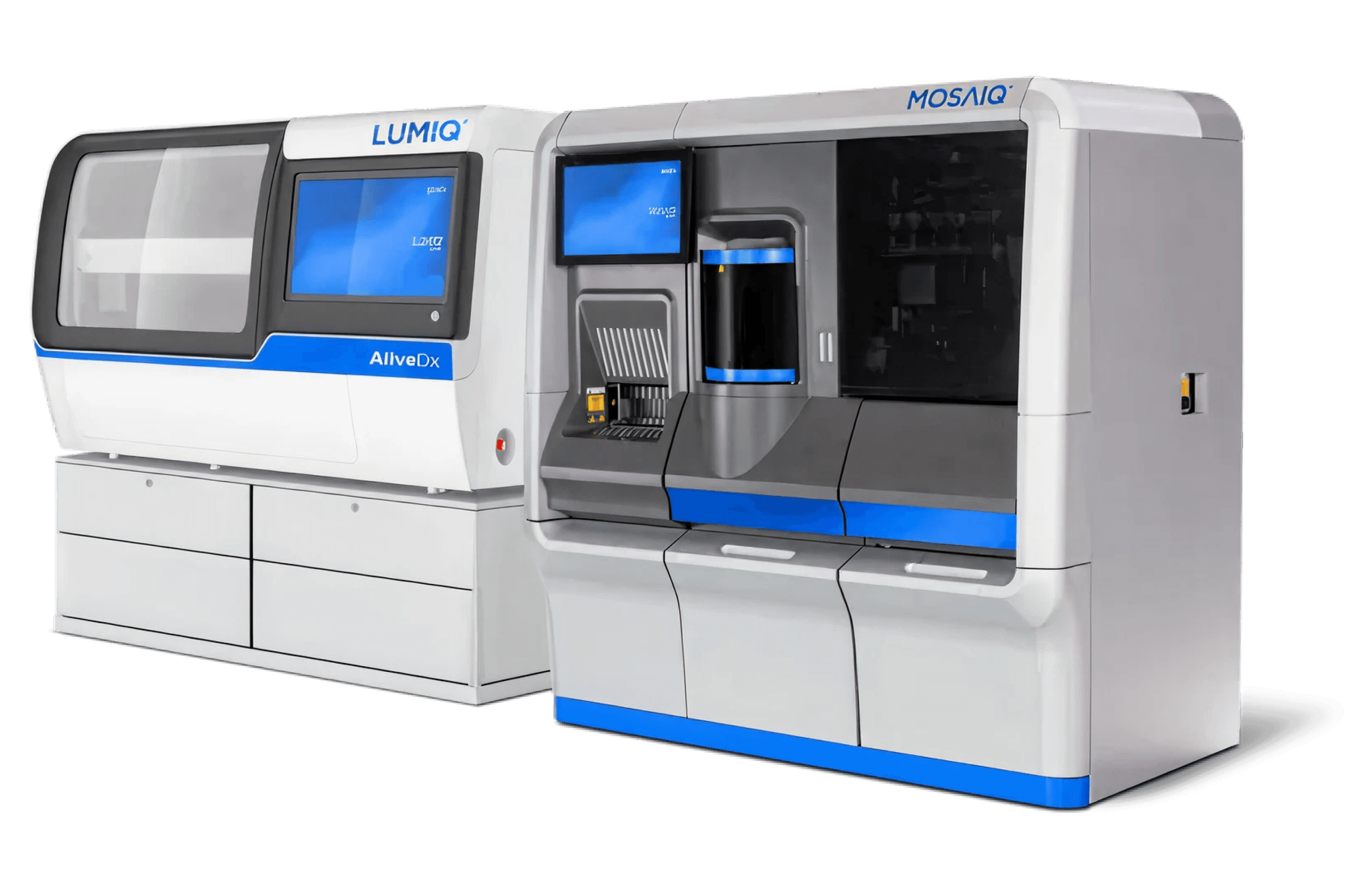
The combination of MosaiQ® and LumiQ® platforms provides a unique, automated, seamless integrated solution to cover your needs for screening and identification of autoantibodies for a wide range of autoimmune and allergic diseases.
All-in-One Automated Solution
LumiQ solution a fully automated slide processor and reader in an all-in-one, sample-to-result workflow for indirect immunofluorescence assays, reducing manual steps and improving efficiency in autoimmune disease testing.
Optimised Workflow & Standardisation
Designed for high throughput and accuracy, LumiQ minimises subjectivity, avoids human error, and supports simultaneous batch processing—up to 216 samples and 12 different assays in one run.
Actionable Insights with Advanced Imaging
Integrated fluorescence imaging and data storage enable fast image capture, endpoint titer estimation, and patient history management, empowering labs with reliable, traceable results.
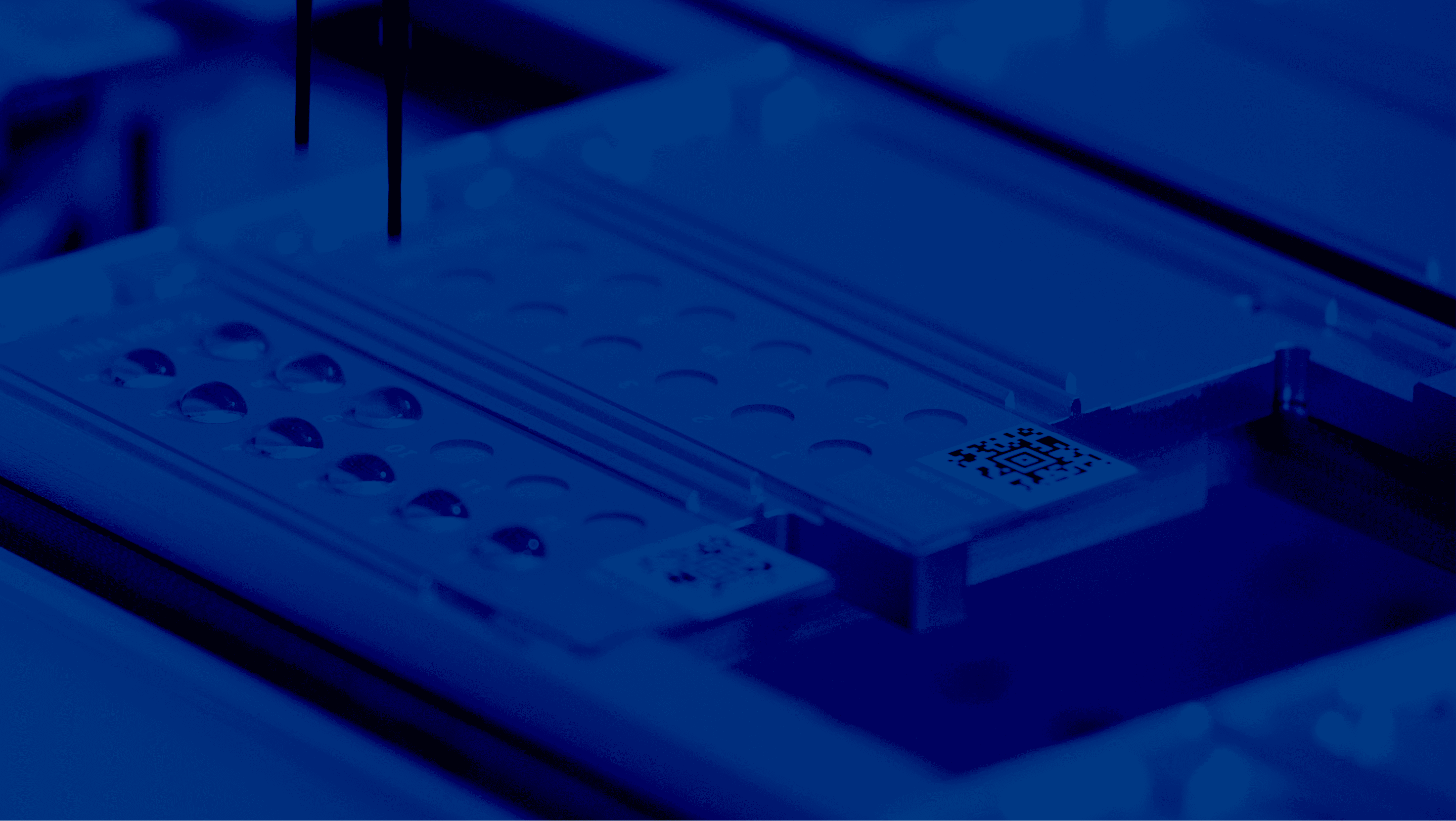
Get Started with MosaiQ®
Complete the form and our team will be in touch with you.
Get Started with MosaiQ®
Complete the form and our team will be in touch with you.
© AliveDx Suisse SA, 2026.
AliveDx, the AliveDx logo, AiPlex, AllergyPlex, MosaiQ and LumiQ are trademarks or registered trademarks of AliveDx group companies in various jurisdictions. Menus and capabilities are subject to change. Subject to regulatory authorization, not all methods may be available in all territories.
© AliveDx Suisse SA, 2026.
AliveDx, the AliveDx logo, AiPlex, AllergyPlex, MosaiQ and LumiQ are trademarks or registered trademarks of AliveDx group companies in various jurisdictions. Menus and capabilities are subject to change. Subject to regulatory authorization, not all methods may be available in all territories.
Multiplex VS Singleplex
A cost effective, end-to-end automation with simplicity, reliability and speed.
Multiplex: One Step Simple Process
Workflow complexity
Singleplex:
Multiple reflex steps
Multiplex: One Step Simple Process
Workflow complexity
Singleplex:
Multiple reflex steps
1 Sample Tube
Sample handling
3+ Sample Tubes
1 Sample Tube
Sample handling
3+ Sample Tubes
1 Microarray
Reagent management
11 Individual Reagents
1 Microarray
Reagent management
11 Individual Reagents
<1 Day
Turn-around time
3–7 Days
<1 Day
Turn-around time
3–7 Days